About Laura
I look to you as the expert on your own life.
Laura Kent, LSWAIC
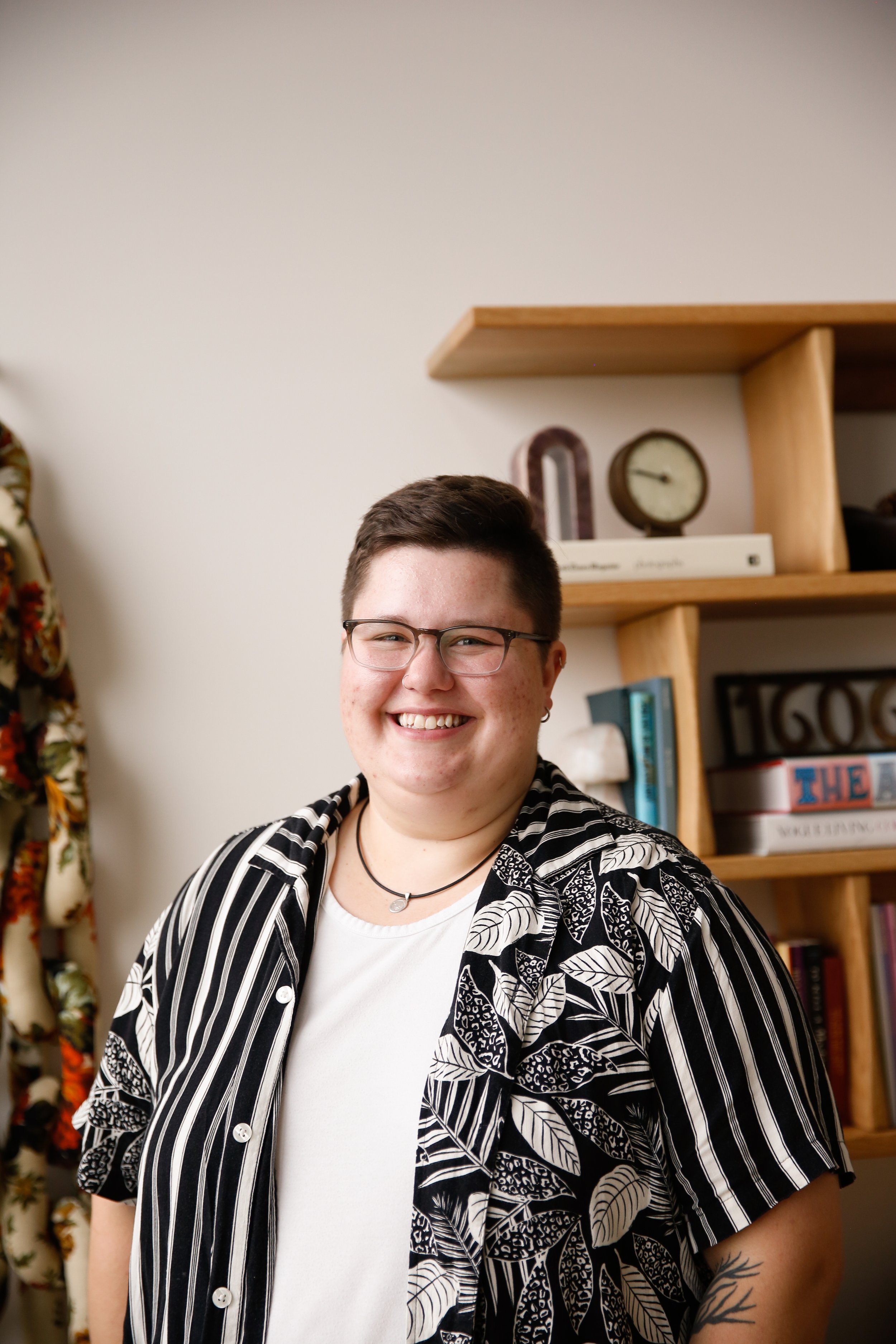
I believe everyone exists in the contexts of relationships–from peer and familial relationships to broader systemic relationships driven by racism, capitalism, heterosexism and other systems of power. My identity as a clinician is informed by my lived experience as a white, fat, queer, trans masculine person living with an invisible disability (to name just a few elements of my identity). I am up front about these aspects of myself because I realize they inform my perspective and approach to working with clients. Just as I bring these identities with me, I encourage you to explore how your lived experience impacts your reasons for seeking therapy.
The following are some core beliefs that guide my work as a mental health therapist: Mental health care is inherently pathologizing given that most people rely on insurance companies to cover the cost of mental health services and said companies require clinicians to diagnose a disorder in order to pay for your care. While I may have to work within the boundaries of insurance requirements, I do my best to be anti-pathological in our work together. One way I do this is by prioritizing client autonomy. I look to you as the expert on your own life. By practicing collaboration and humility, I aim to provide a nonjudgmental space for you to process your emotions and experiences.
I have a Master of Social Work degree from the University of Washington and a Master of Arts in Women and Gender Studies from San Francisco State University. Prior to starting my own practice, I was an outpatient therapist at a community behavioral health agency and in a middle school setting. Other professional roles include being a community services/resource coordinator at an elementary school and being a caregiver for toddlers and young children.

I specialize in the following issues and topics:
depression
anxiety
trauma
identity development
parenting
attachment
relationship issues
childhood behavioral or emotional difficulties
disability
neurodivergence
gender
sexuality